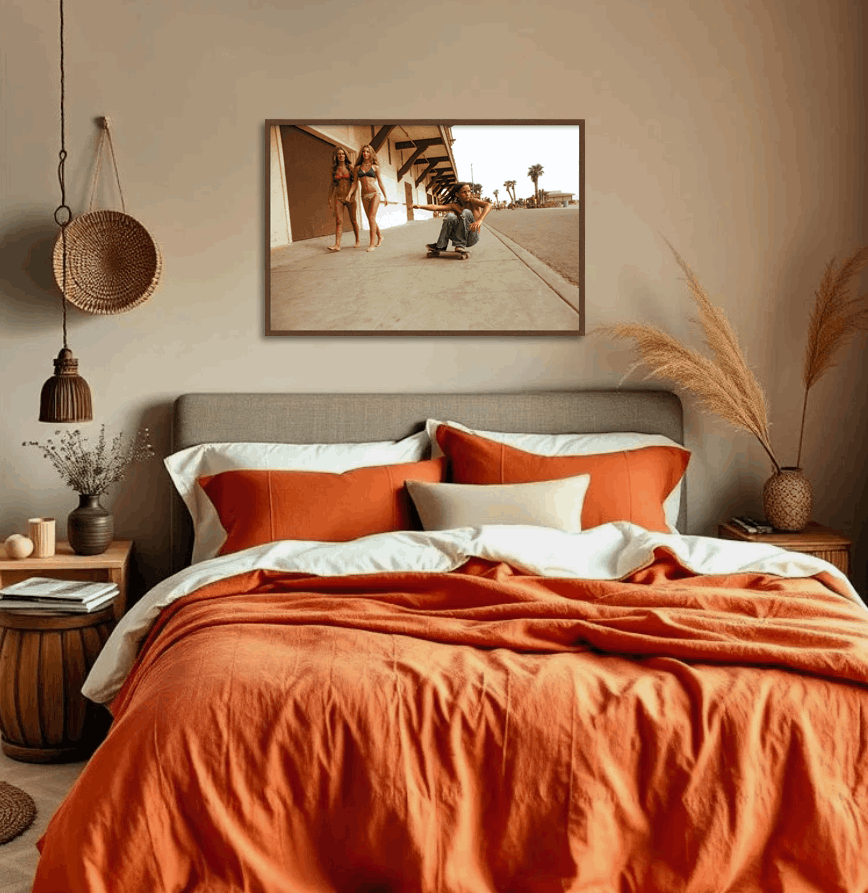
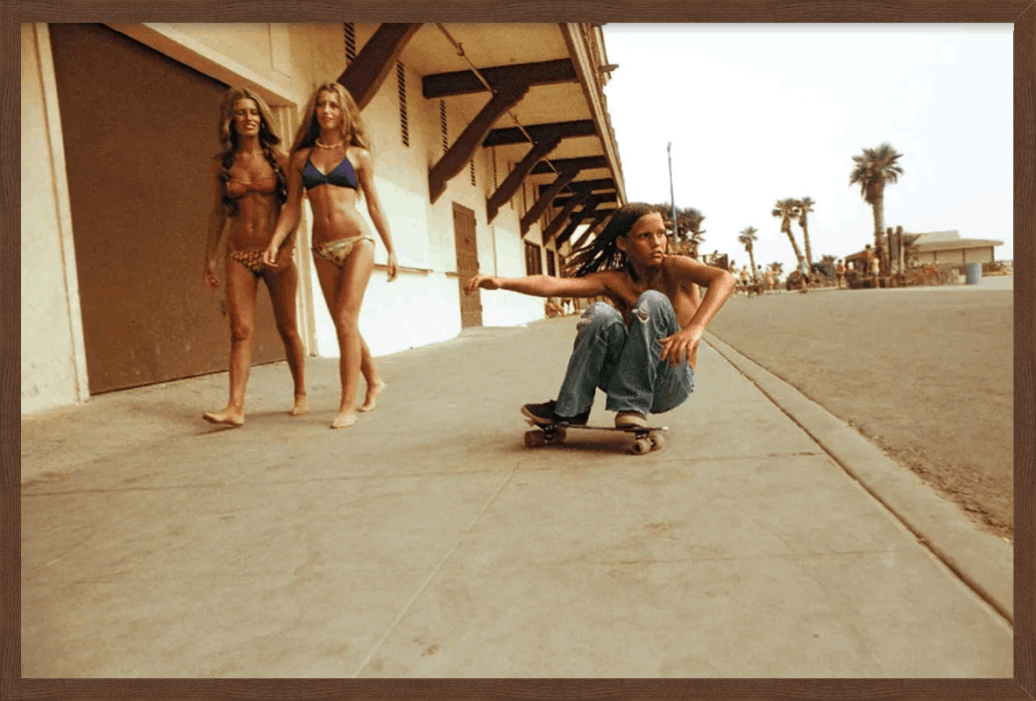
Two sun-drenched California girls and a kid on a board, each completely in their own world. No agenda, no awareness of each other — just sunshine, concrete, and the pure unselfconscious freedom of a Southern California summer afternoon that could only have existed in 1976.
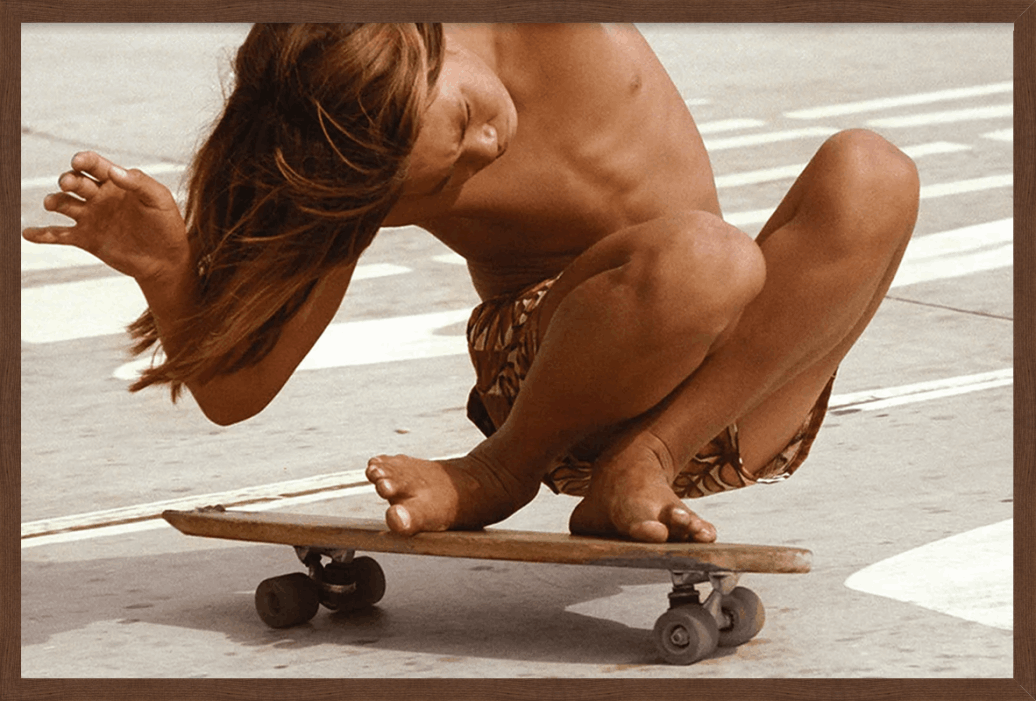
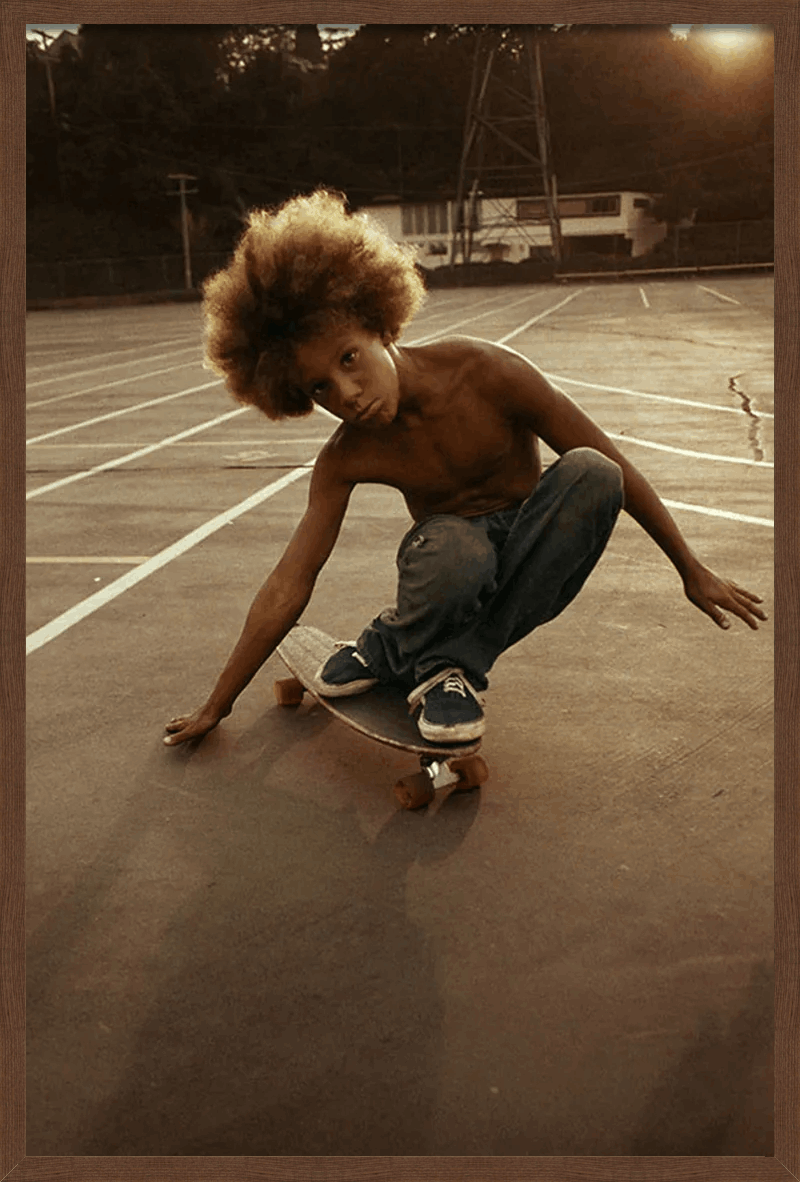
Low to the ground, grinding and carving the asphalt like a wave. Young, fearless, and utterly anonymous — this rider went on to make some very big waves. Hugh tells the rest. "That shot was one of several I did on the street, at Balboa Island, in the summer of 75, just as I was beginning the Skate series. I was shooting some kids that were hot-dogging on the street on the sidelines of a small skate contest. I had no idea who they were. A few years later, someone saw them and asked if I knew who that kid was. I said no. He said it was Danny Kwock, who went on in the 80s to be a top surfer in the Newport area, and surfed for Quiksilver. Now he is the president of Quiksilver entertainment. He is a very cool guy." — Hugh Holland.
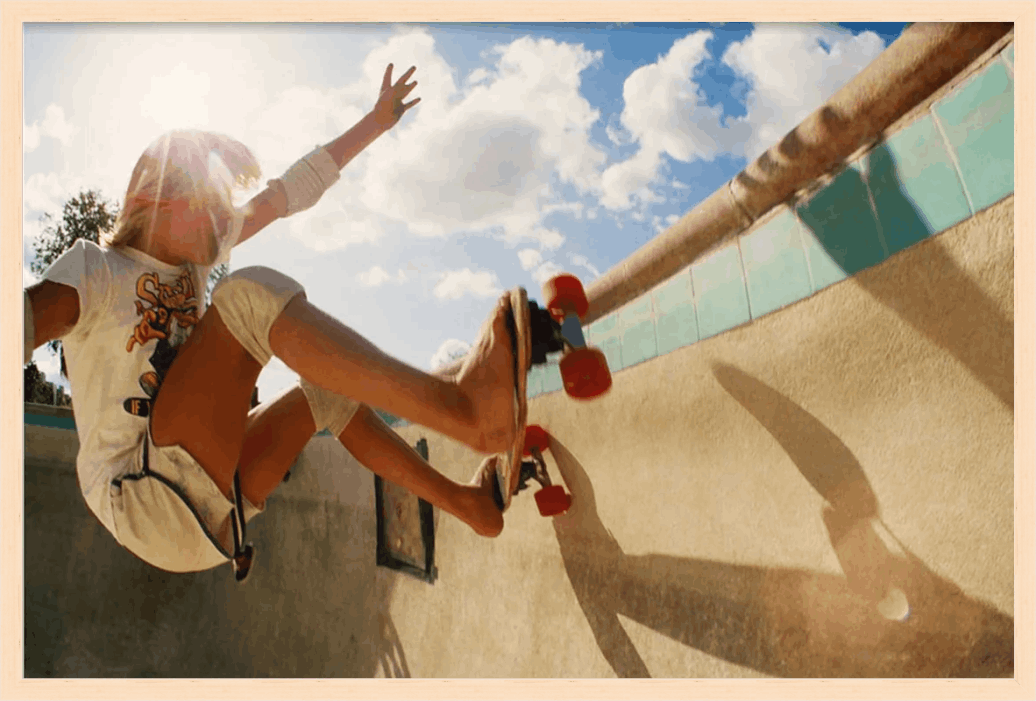
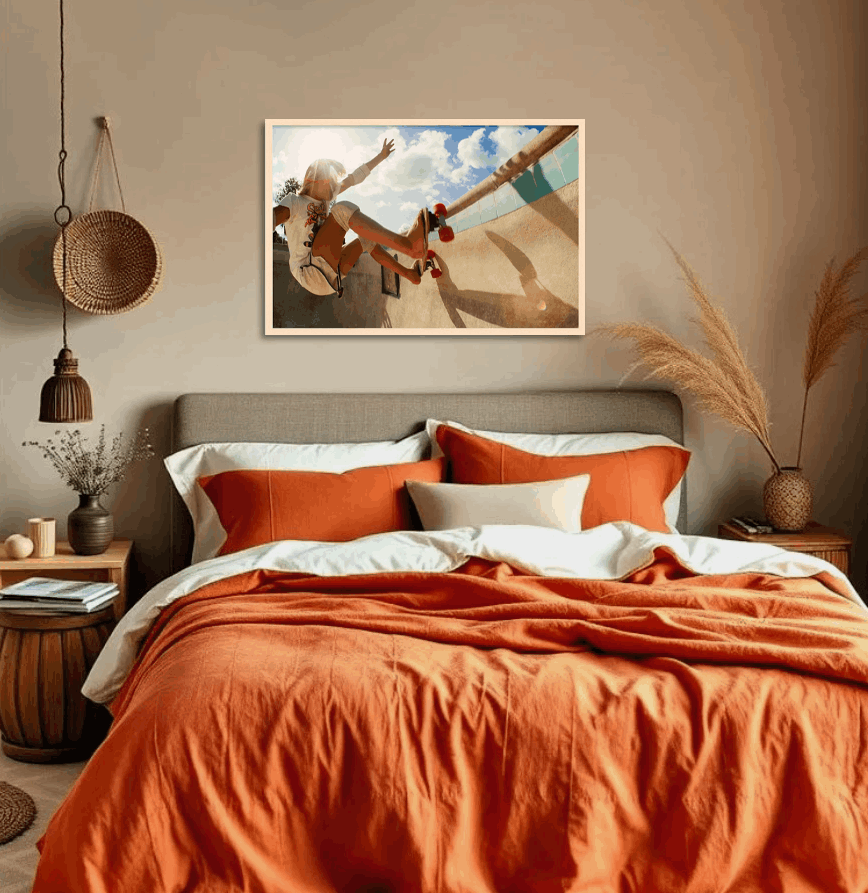
At the pinnacle of his highest point, the sun catches him at an angle that makes him transcend gravity and space — suspended in time, suspended in light. He reaches out. And so do we.
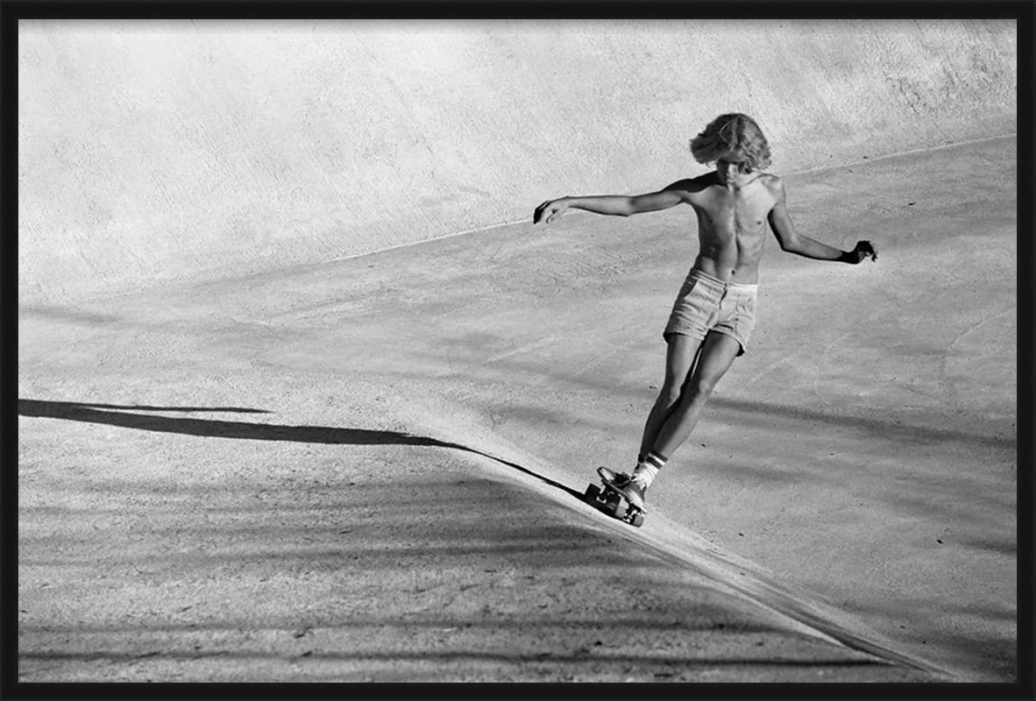
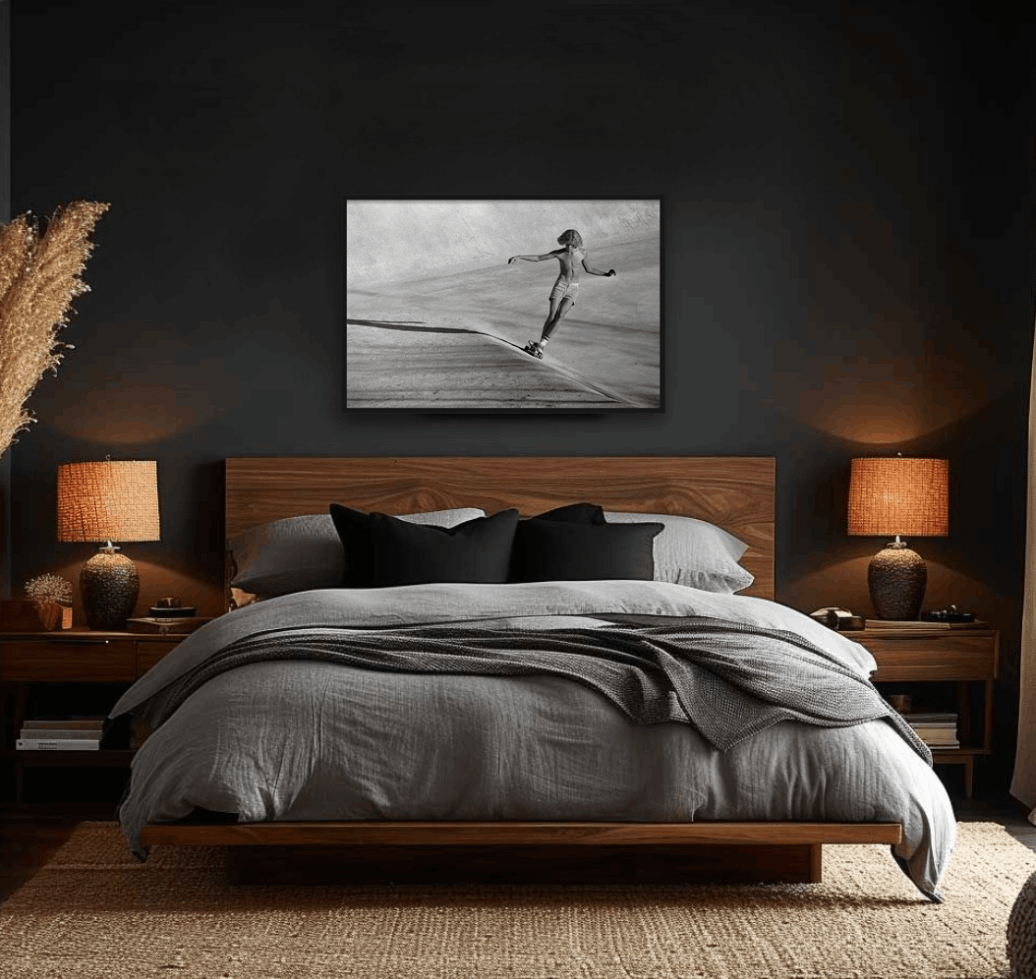
A solitary skater owns the empty concrete of the Viper Bowl, arms wide, riding the curve like a wave. Cruciform, weightless, ethereal — a worshipper caught mid-devotion, arms open to the California sun. One of Holland's most iconic images, and the moment skateboarding stopped being a pastime and became an art form.
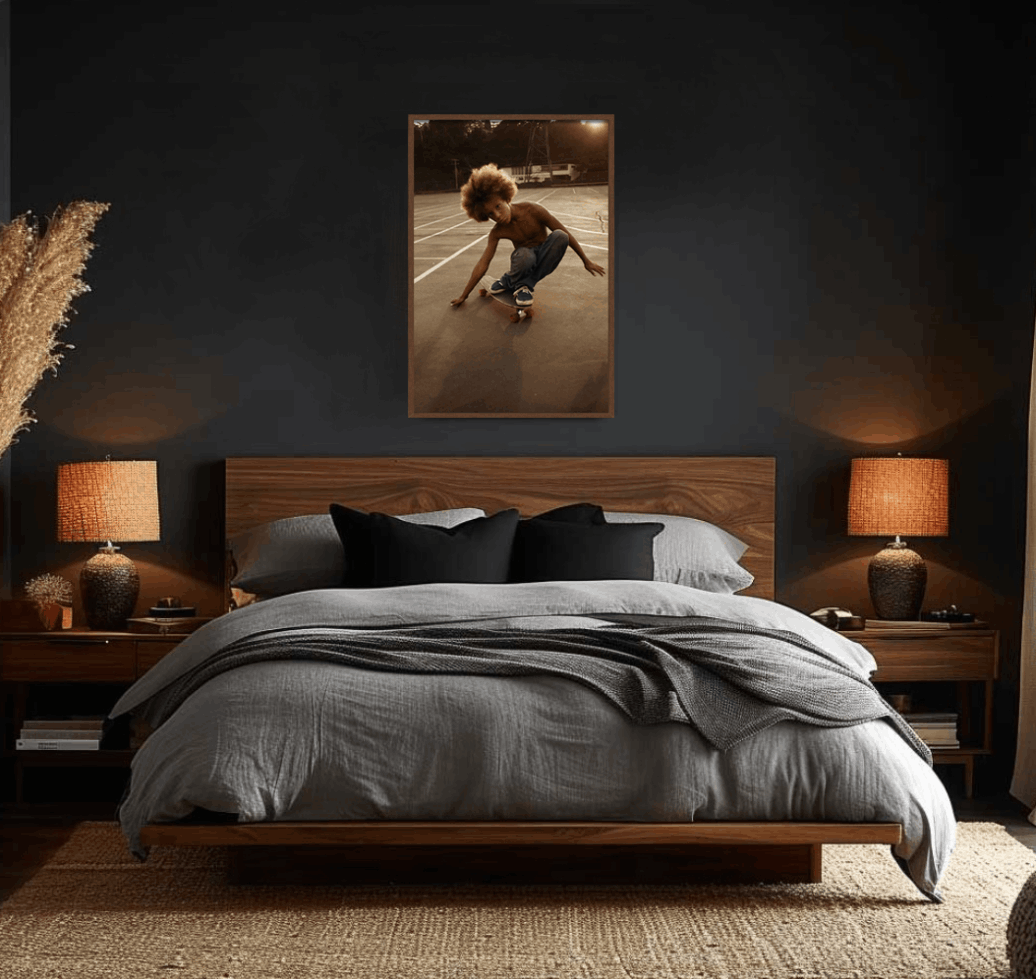
Golden hour sunlight turns his hair to fire — a young Apollo riding his chariot across an empty Los Angeles schoolyard. Holland had a gift for finding poetry in ordinary places, and this is one of his most lyrical, timeless, and effervescent.